



Jun 09, 2026
Custom Home vs. Spec Home: Which Is Right for Your Family?
By Noura Homes
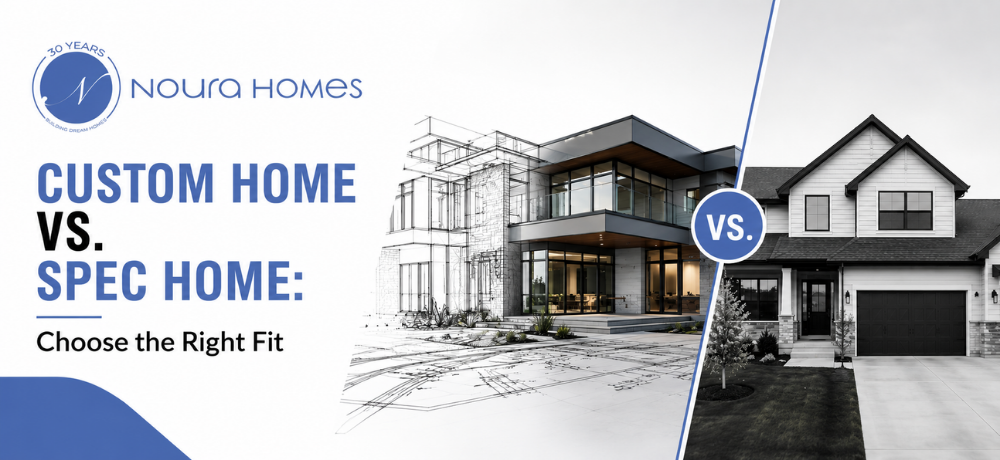
For many buyers in Greater Vancouver, one of the first big choices is how the home will come together.
A spec home appeals to people who want a simpler, faster path. The layout is already chosen. The finishes are mostly done. In many cases, you can walk through the house, decide if it works, and move forward without months of planning. For busy families, that ease matters.
A custom home is a different experience. You build around your routines instead of squeezing your routines into someone else’s floor plan. Maybe that means a real home office with a door that closes. Maybe it means aging-in-place features for the future, a prep kitchen you’ll use every day, or better connection to the backyard. Those details are hard to add later, and they matter more than people think.
The better option depends on what matters most to you. If you want move-in-ready convenience, a spec home may be the right fit. If you want something more personal than the polished, one-size-fits-most feel of an hgtv dream home, custom may make more sense.
What’s the difference between a spec home and a custom home?
A spec home is built before there’s a specific buyer. The builder picks the floor plan, finishes, and features based on what they think will sell, then puts the completed or nearly completed home on the market. In other words, they build the house first and find the buyer after.
A custom home works the other way around. It’s planned for one homeowner from the start. You work with the builder, designer, and consultants to shape the layout, materials, and practical details around your lot and your life.
People also mix up spec homes with production homes. A production or tract home is usually part of a larger development with a small menu of plans and options. A fully custom home gives you much more flexibility and much more involvement.
Spec homes can absolutely be high quality, especially in Greater Vancouver’s more expensive neighborhoods. But they’re still built for broad appeal. A custom home is built for you. That difference affects cost, timing, and how well the house fits your family over the long run.
How cost, timeline, and design freedom really compare
For most families, the real issues are pretty simple: how much it costs, how long it takes, and how much say you get.
A spec home usually gives you a clearer purchase price and a faster move-in date. If the house is already finished, or close to it, you can settle much sooner than you could with a custom build. That speed can be a huge relief if you’re lining up a sale, trying to stay in a certain school catchment, or moving for work.
A custom home takes longer. There’s planning, design, permits, consultant meetings, and construction. It can feel like a lot, because it is. But the payoff is control. You’re not limited to choices made for a generic buyer.
Cost is where people often get tripped up. It’s not always as straightforward as “spec is cheaper, custom is more expensive.” Sometimes that’s true. Sometimes it isn’t.
- Spec homes cut down on decision fatigue and get you moved in sooner.
- Custom homes let you put money where you actually care about it.
- Spec home upgrades can pile up fast if the standard layout or finish package doesn’t really work for you.
If you’re building a long-term family home, design freedom often ends up carrying more weight than buyers expect.
What are the disadvantages of a spec house?
The biggest drawback is limited personalization. By the time you walk into a spec home, many of the important decisions have already been made. The layout is set. The exterior is set. A lot of the finish choices are set too. That means your family may need to adjust to the house, instead of the house being built around the way you live.
That can show up in small ways or expensive ones. Maybe the mudroom is too tight. Maybe there’s no spice kitchen. Maybe there’s no easy path to a legal suite later on. Maybe the home looks great at home in listing photos but feels awkward once you imagine weekday mornings, backpacks, groceries, and people all moving through the same space.
Lot and layout compromises are common too. A spec home may sit on a less desirable lot, have window placement chosen for symmetry instead of privacy, or include room sizes that look fine during a showing but feel off in daily life.
Then there’s the issue of hidden follow-up costs. A home can seem move-in ready and still need a lot after closing: landscaping, window coverings, storage, built-ins, tech upgrades, or changes to make the place function better. People buy for convenience, then spend months tweaking things they assumed were already solved.
For some buyers, that tradeoff is worth it. If speed and simplicity matter most, a spec home may still be the better choice. But if you want a house that fits your family for years, not just one that photographs well, the limitations are hard to ignore.
Are custom homes harder to sell?
Not necessarily.
In many higher-end Greater Vancouver neighborhoods, a well-designed custom home can sell extremely well. Buyers respond to good construction, a strong location, and a layout that feels thoughtful without feeling strange. Resale usually comes down to whether the home was customized with some discipline.
The best custom homes tend to include things buyers consistently value:
- quality materials and solid workmanship
- practical family layouts
- good indoor-outdoor flow
- efficient systems and modern heating, cooling, and ventilation
- flexible rooms for work, guests, or extended family
Where custom homes can struggle is when the design gets too specific. A room built for one unusual hobby, finishes chosen for a very narrow taste, or a plan that only works for one type of household can shrink the buyer pool. There’s a line between personal and overly personal, and it matters.
So no, custom homes are not automatically harder to sell. In many cases, they do very well. But the smart ones balance personality with livability. That usually ages better than a house built to feel generic, or one packaged like our home 2 in a brochure.
And one small note people don’t always consider: if you know you’ll need care or support at some stage, planning ahead in a custom build can be a real advantage. Features that make daily life easier now may also help you stay home instead of moving later.
The Noura Homes Approach
At Noura Homes, we believe the best projects start with good planning. Whether a family chooses a custom home or a move-in-ready home, the goal is the same: creating a home that works well today and continues to work years from now.
A home is one of the biggest investments most families will make. Our role is to help homeowners make informed choices, avoid costly surprises, and create a home that feels comfortable, functional, and built to last.
Get in touch to learn more about available homes, custom home opportunities, and upcoming communities across Greater Vancouver.